
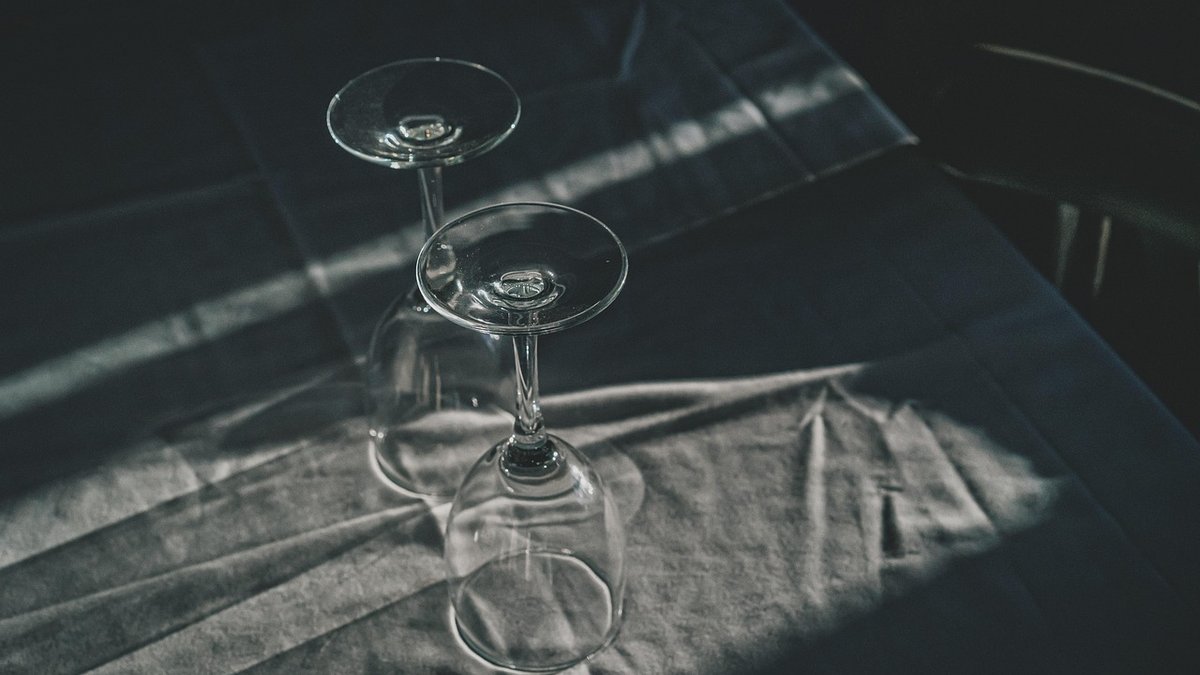
Red wine is one of the few spills that genuinely punishes delay. The colour comes from anthocyanin pigments, and they begin bonding with linen and cotton fibres almost as soon as they land. Leave a spill for an hour and you are fighting a stain; leave it until morning and you are fighting a dye.
So the first rule is simple: stop the conversation, move the glasses, and deal with it. Lift the tablecloth clear of the table rather than pressing at it where it lies — you do not want wine being pushed through to whatever is underneath. Carry the stained section over a sink or a bowl, keeping the fabric supported so the wet patch does not spread.
Two things to avoid straight away. Do not rub, and do not reach for hot water. Rubbing drives pigment deeper into the weave and roughens the surface of the cloth, while heat can set the colour for good.
Blotting is your first proper move. Use a clean white cloth, an old tea towel or a wad of kitchen paper, and press down firmly and briefly, lifting straight up. Change to a clean area of cloth as soon as it starts to look pink, otherwise you are simply redistributing the wine around the fabric.
Once the worst of the liquid is lifted, flush the area from the back of the stain with cool running water. Working from the reverse pushes the pigment back out the way it came in, rather than driving it further through the cloth.
If a faint shadow remains after flushing, a soak will usually finish the job. Fill a basin with cool or lukewarm water — never hot — and add an oxygen-based laundry powder or a scoop of oxygen bleach. These release oxygen slowly and lift colour out of the fibres without attacking the cloth itself.
Submerge the tablecloth completely, give it a gentle squeeze so the solution reaches the stain, and leave it for at least thirty minutes. For a stubborn mark on white cotton or linen, an overnight soak is perfectly safe and often remarkably effective. Check the water before you drain it: if it has turned noticeably pink, the treatment is working, and a second soak may be worthwhile.
What you should not use is chlorine bleach. It weakens linen fibres over time and frequently leaves white cloth with a yellow cast that is far harder to live with than the original stain. Save the bleach for the utility room, not the dining table.
Dried red wine is not a lost cause, but it needs patience rather than force. Rehydrate the mark first by soaking the area in cool water for half an hour, then treat it as a fresh stain with washing-up liquid and an oxygen soak.
For white linen and cotton only — never for synthetics, viscose or anything with a coloured trim — the traditional boiling-water method still works beautifully. Stretch the stained section over a heatproof bowl, secure it with an elastic band, and pour boiling water through it from a height of about 30cm. The force and heat together push the pigment straight out. Repeat two or three times if needed.
Wash as normal once the stain has faded, using a gentle cycle at 30°C or 40°C with your usual detergent. Before the cloth goes anywhere near a tumble dryer or an iron, hold it up to the light. If any trace of pink remains, treat it again — heat will fix whatever is left permanently, and no amount of soaking will bring it back.
A little routine goes a long way. Store clean tablecloths rolled rather than folded if you have the drawer space, as permanent creases weaken fibres along the fold lines. Keep a small stain kit near the dining room — a clean white cloth, a bottle of cool water and a tub of oxygen powder — so that the first five minutes are never wasted hunting through cupboards.
And if you are expecting a lively dinner with a good bottle of claret, consider a pale linen runner over the white cloth. It is not defeat; it is strategy. With quick blotting, cool water and a patient soak, however, your best tablecloth will be back on the table, spotless, long before the next guests arrive.

Hi, my name is Anthony kuber. I am artist and fashion designer.
I love to travel and writing blogging.
Your email address will not be published. Required fields are marked *
Software Developer & Writer
Hey, I'm Diva, a developer and writer blending code and creativity. I'm driven by a deep curiosity and a relentless pursuit of excellence. Join me as I craft digital solutions and captivating stories.


